Northampton District High School is creating a fully circular organic waste system by combining sustainable chicken keeping, expanded worm farming and hands-on student learning.
The Mid West school, which offers Agricultural/Farm Studies as a specialist subject, has a farm area maintained by students in years nine and ten.
Teacher Bridie Teakle said funds from two WasteSorted Schools grants supported activities to suit all ages and abilities.
“We already had a great Green Team collecting organic waste but wanted to ensure our systems didn’t fall by the wayside. By upgrading the chicken coop and pen to be fox proof and improving our worm farms, our community is now better positioned to process 90 per cent of our organic school waste,” Bridie said.
Chicken coop upgrade
Keeping chickens is central to the school’s organic waste system and involves students of all ages.
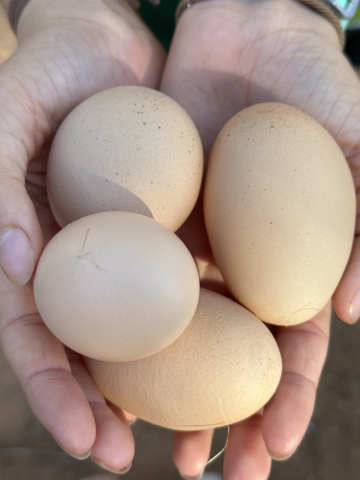
Kindy and Pre-primary students run Chook Patrol, collecting eggs daily and using the activity to practise maths skills such as sizing, recording and graphing. The collected eggs are then used for the school’s breakfast club and cooking classes.
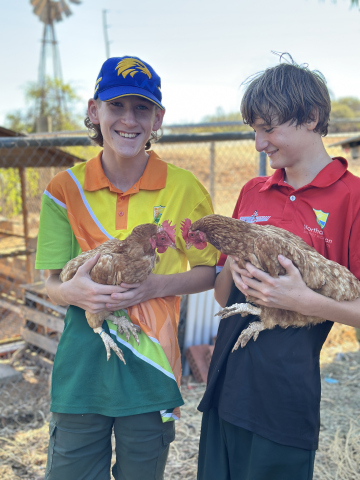
Students in the Award Scheme Development and Accreditation Network (ASDAN) program check water and feed the chickens daily and take part in paddock-to-plate cooking sessions as part of their life skills learning.
Agriculture students maintain the enclosure to ensure the system runs smoothly.
With these actions embedded, new infrastructure was needed. Bridie focused on designing a healthy, easy-care space to support student-led maintenance.
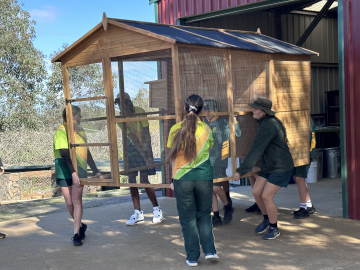
The upgraded coop, attached to the existing pen, safely houses up to 12 chickens, protecting them from foxes. It includes a walk-in design built from rot-resistant wood, an automatic door and large nesting boxes. Following the impact of Cyclone Seroja in 2021, the pen upgrade also added a large metal roof for extra weather protection.
Slide-out metal trays make cleaning easy and allow chicken manure to be collected for use in the school gardens. A tunnel system enables chickens to safely access other garden areas to forage.
Students worked alongside local tradespeople and community members as builders, painters and carpenters to deliver the improvements.
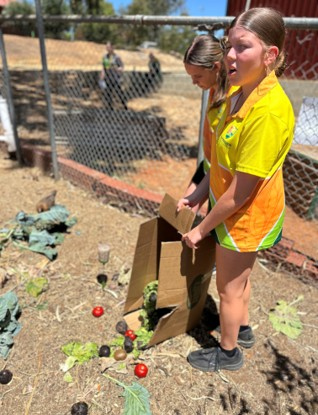
In addition to permaculture self-feeding practices, food scraps are collected for the chickens from the Breakfast Club, cooking classes, P&C Monday morning tea, classroom Crunch & Sip, and the gardener’s grass clippings and weed pile.
Schools interested in similar systems can refer to the Department of Education’s Use of Animals in Public Schools Policy and Routine care and management of animals in public school farms procedures.
Closing the loop with worm farms
The school also expanded its worm farming capacity to complete its closed-loop approach.
Two converted fridge worm farms were funded through a WasteSorted Schools grant. A local provider repaired seals, added ventilation holes, installed free-flowing drainage and mounted the fridges on angled, sturdy bases at a safe and workable height, with added locks for safe school use.
Students from various year groups helped decorate the fridges, prepare bedding using coir fibre and transfer the worms from existing bathtub worm farms.
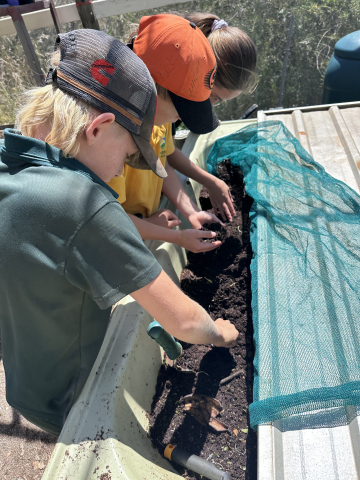
Ongoing maintenance is student-led and includes preparing worm food using a food processor, watering worms twice weekly and separating castings to make worm tea. The worm tea is used as fertiliser on school gardens, including small-scale crops and orchard trees.
In 2024, the Worm Farm Expansion became a community initiative, with the school accepting organic waste donations from St Mary’s School, a local café and the local supermarket.
For more information on setting up worm farms, view the WasteSorted Schools worm farm videos and explore the WasteSorted Schools Worms curriculum guide.
Student learning through hands-on experiments
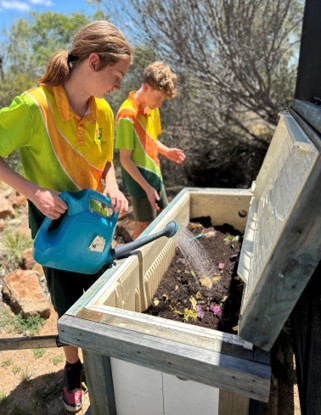
Teachers across the school have integrated the systems into their lessons, with students conducting experiments comparing plant growth with and without worm tea, creating compost in a bottle and testing pH and acidity levels. Students also applied their homemade compost to the farm area, deepening their understanding of how organic waste supports healthy plant growth.
Through these combined efforts, Northampton is demonstrating how schools can turn organic waste into meaningful learning opportunities, strong community partnerships and a more sustainable future.